
What Does It Take to Get Into James Madison University?
Earlier this week, I traveled to James Madison University for their 2026 Visiting Counselor Day. Hosted by JMU Admissions and their Counselor Education Program, the event gave us counselors in-depth info about what’s new at JMU and, in particular, a “behind the curtain” look at how JMU reviews applicants.
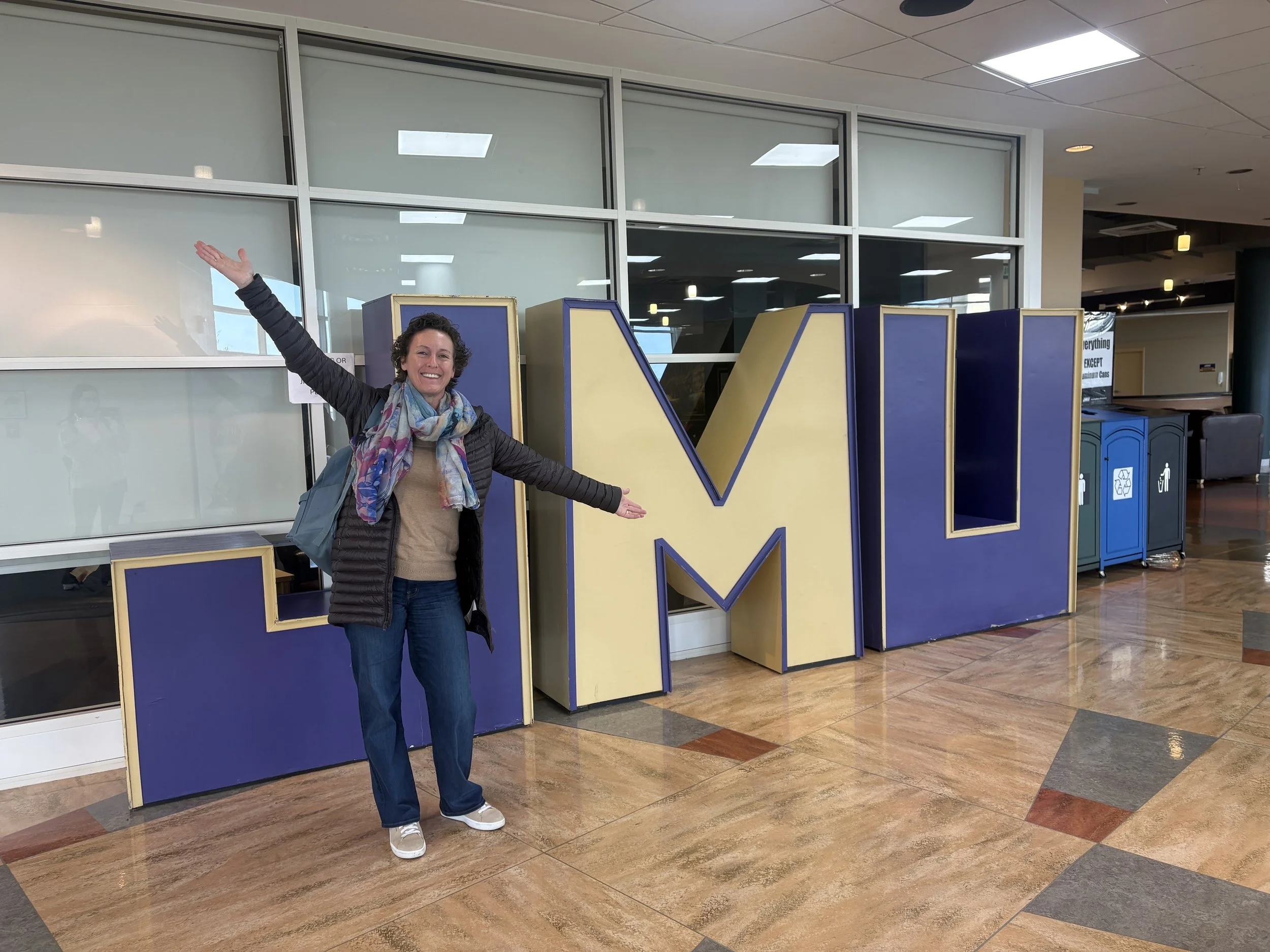
JMU really sets the bar for admissions transparency with high school and independent college counselors. They consistently share detailed data and information about their admissions process, which in turn allows me to share clear and calm information with Endeavor students and families. I am grateful for their partnership in the effort to guide students!
Here are 3 important things that students need to know if they’re planning to apply to James Madison University:
JMU does NOT practice holistic admissions.
“Holistic admissions” is a term you hear a lot in college admissions. It refers to the practice of conducting a “whole student” review, taking into account not just GPA and test scores but also things like recommendations, essays, and extracurricular activities. At JMU, these are all truly optional pieces of the application because they play a minimal role in an admissions decision. Course rigor and grades are the dominant factor in the admissions review.
JMU looks intensely at a student’s academic rigor (9th-11th courses completed + 12th schedule).
A student’s course choices are most important (in context of what's offered at the student's school). JMU is looking for students to take advantage of Advanced Placement (AP), International Baccalaureate (IB), and Dual Enrollment (DE) classes, when available. The requirements to receive the highest-rated score for course rigor vary region-to-region and even school-to-school, but students should be challenging themselves with college-level coursework.
Cumulative GPA is NOT used in the admissions review.
JMU is only interested in a student’s core GPA (grades in English, Math, History, Science, and Foreign Language). Only if an elective fits into one of those categories is it counted in the recalculated GPA. Doing well in PE but poorly in Spanish will not benefit a JMU applicant.
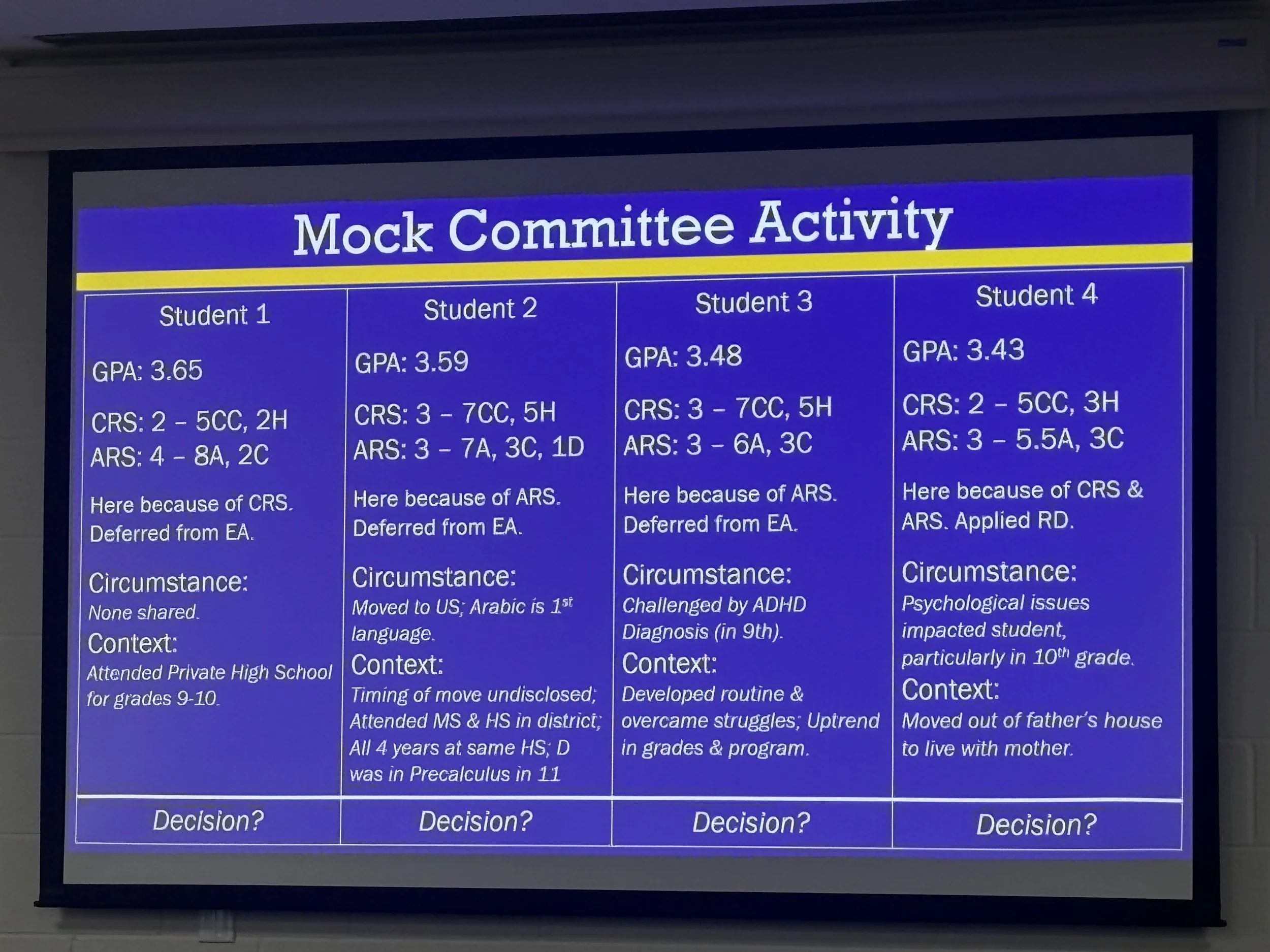
After the presentation, we were given four applicant profiles and asked to decide who should be accepted, as if we were on the Admissions Committee. It was so interesting to talk with my fellow counselors about who we’d each accept and why.
If you’re interested in applying to James Madison University, I hope this information helps you understand exactly what’s important and what’s not in their admissions review!
Side note: JMU consistently ranks in the top colleges nationwide for on-campus food, and now I understand why— my lunch at JMU was some of the best dining hall food I’ve ever eaten (and I’ve eaten a lot)! I’m still thinking about the lamb meatballs and hand-scooped ice cream (obviously not together, but you get my drift). YUM.

Interested in our college admissions advising? Learn more about Endeavor’s services or schedule an inquiry call.
3 Insights Into Selective College Admissions From My Recent College Fly-in
Greetings from Houston, Texas! I'm finishing up a packed few days at Rice University, where I was invited to their first-ever Independent Educational Consultant (IEC) Fly-in. Fly-ins are intensive campus visits for counselors; I'm typically invited to several a year (next one: the US Naval Academy).
To sum up Rice: highest-quality academics, myriad opportunities, and a vibrant campus culture with access to all the resources of America's 4th largest city (including the world's largest medical complex just steps from campus). What a fantastic place!
A valuable part of Fly-ins is connecting with senior leadership for insight into strategic goals, upcoming programs and initiatives, and admissions priorities and practices. Rice's Vice President for Enrollment and Dean of Admissions and Financial Aid (who was previously at Penn and MIT) spent 90 minutes sharing invaluable details about Rice's admissions standards and review process with us.
Here are a few insights and takeaways applicable not just to Rice (8% acceptance rate overall), but also to admissions at other highly selective institutions:
1. "We are looking for intellectual vitality."
Takeaway: Selective institutions are looking for authentic intellectual curiosity. Is a student demonstrably interested in academic topics/areas? How is that curiosity evident in their course selection, letters of recommendation, activities, experiences, and essays? High grades, rigorous courses, and (if submitting) strong test scores are a minimum for admissibility rather than distinguishing characteristics.
2. “When an application shows up on January 3 and the deadline is January 4, we may wonder if they’re not as serious.”
Takeaway: Submitting an application right before a deadline can send an unintended, negative message about a student's interest.
3. “Connecting to what Rice is is REALLY important. If they’ve missed the mark on understanding our community, that’s a disconnect for us.”
Takeaway: Understanding and communicating WHY a student is interested in a highly selective institution matters immensely. Highly selective colleges look for students who demonstrate clear understanding of programs, culture, and opportunities, how those will enable a student to achieve their goals, and how a student will fit into a college's community.
I hope these insights are helpful for understanding more of what highly selective colleges are looking for in their application reviews.
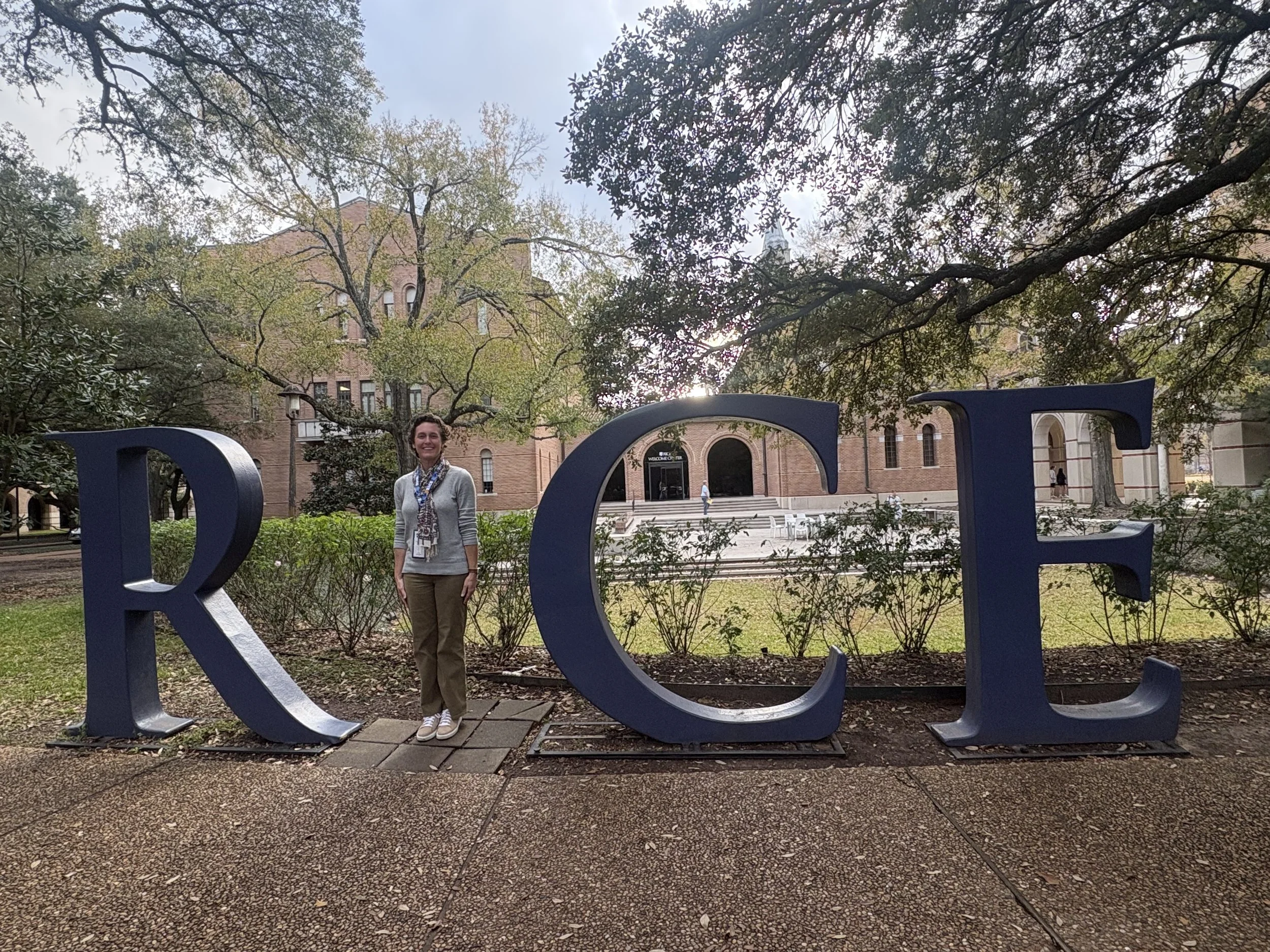
Being the “I” in Rice!
Interested in our college admissions advising? Learn more about Endeavor’s services or schedule an inquiry call.